
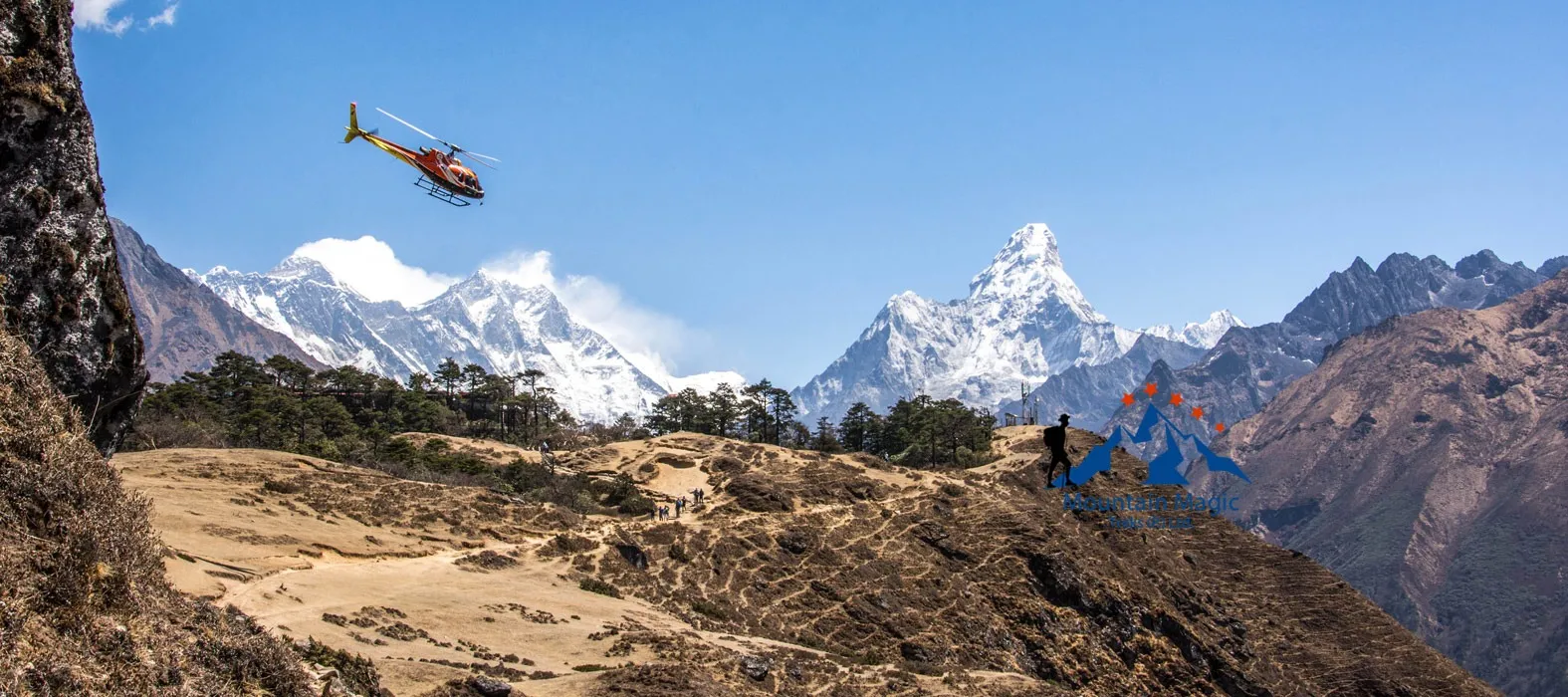
Planning an Everest trek can feel confusing when you first look at the route. There are many villages, changing elevations, long walking days, and weather concerns to think about.
The Everest Base Camp Trek With Helicopter Return makes the plan easier to understand. You walk through the main Everest trail, reach Everest Base Camp and Kala Patthar, and then use a helicopter for the journey back. The listed trip takes 10 days and includes acclimatization stops in Namche Bazaar and Dingboche.
It is a good option for travelers who want to experience the trail but do not want to spend several extra days walking back.
Your Adventure Begins in Kathmandu
Kathmandu is more than just the starting point.
It gives you time to meet your trekking team, check your equipment, and get ready for the mountains. The trip includes airport pickup and a stay in Kathmandu before the trek begins.
The next major step is the flight to Lukla.
The Flight to Lukla
The listed itinerary uses a shared helicopter flight from Kathmandu to Lukla. The flight takes around 45 minutes under the stated itinerary.
The change is quick.
One moment you are in a busy city. Soon you are looking at hills, deep valleys, and Himalayan peaks from the air.
After landing in Lukla, the walking part begins.
The First Walking Day Is Short
The first trek goes from Lukla to Phakding.
The listed route is about 7 kilometers and takes around three hours. This shorter day gives you a chance to get used to walking with your trekking gear.
You follow the Dudh Koshi River and pass through small settlements along the way.
Do Not Rush the Beginning
It can be tempting to walk quickly because you feel fresh.
Avoid that.
You have several days ahead, and the altitude will continue to rise. A comfortable pace from the beginning can help you save energy for the harder sections.
Namche Brings the First Big Climb
The walk from Phakding to Namche Bazaar is much longer.
The itinerary lists around 12 kilometers and six to seven hours of trekking. The route passes through Monjo and the Sagarmatha National Park area before the trail climbs toward Namche.
This is where many trekkers first realize that Everest is not going to be an easy walk.
The Final Climb Takes Patience
The path becomes steeper before Namche.
You may cross suspension bridges and walk beside the river before starting the main uphill section.
Take short breaks when needed.
There is no benefit in arriving at Namche completely exhausted.
Use the Namche Acclimatization Day
Namche sits at around 3,440 meters, so the extra day here is important.
The itinerary suggests several activities, including walking toward the Everest View Hotel, visiting Khumjung and Khunde, or exploring the local museum and information center.
Keep the Hike Easy
The goal of an acclimatization day is not to set a distance record.
A short hike followed by rest gives your body time to adjust. Drink water, eat properly, and get enough sleep.
This is one of the places where patience can make the rest of the trek easier.
Tengboche Brings a Different Experience
The route then moves toward Tengboche.
The walk takes around five to six hours according to the listed plan. Tengboche is known for its Buddhist monastery and wide mountain views.
You can see peaks such as Ama Dablam from the area.
Give Yourself Time at the Monastery
The monastery is not simply a place to take photographs.
It is an important religious site for the local community. If you visit, be quiet and follow local rules.
The cultural side of the Everest region is just as interesting as the mountain views.
Dingboche Marks Another Change
From Tengboche, the trail continues toward Dingboche.
The village sits at around 4,410 meters. The trees become fewer, the landscape opens up, and the air feels thinner.
The Everest Base Camp Trek With Helicopter Return includes another acclimatization day here.
A Short Climb Can Feel Long
The itinerary includes a hike toward Nangkartshang Peak during the acclimatization day.
The hike is useful because it lets you gain some height before returning to sleep at Dingboche.
At this altitude, walking slowly is normal.
Do not compare your pace with another trekker.
The Trail Gets More Rugged
After Dingboche, you continue toward Lobuche.
The route takes you through a much more open landscape, with rocky ground and large mountain views. The itinerary also includes the Thukla memorial area, where memorials honor climbers who died in the Everest region.
This can be a quiet part of the journey.
It reminds you to respect the environment and the challenges of high-altitude travel.
Gorakshep Is the Last Major Stop
The trail from Lobuche leads toward Gorakshep.
This is one of the highest places where you stay during the trek.
The air is thin, and even normal walking can feel difficult.
Carry a Small Bag to Base Camp
When you leave Gorakshep for Everest Base Camp, you do not need to take all your luggage.
Leave the heavy items at the lodge and carry a small daypack.
Take:
-
Water
-
Warm clothing
-
Snacks
-
Sunglasses
-
Camera or phone
-
Personal medicine
A lighter bag can make the high-altitude walk more comfortable.
Reaching Everest Base Camp
The listed route places Everest Base Camp at about 5,364 meters.
The walk from Lobuche to Gorakshep, then Base Camp and back to Gorakshep, is one of the longest days of the trip. The itinerary estimates seven to nine hours.
Enjoy the Moment
When you reach Base Camp, do not immediately think about the return walk.
Stop.
Look at the Khumbu Icefall and the mountains around you. Take your photographs. Think about the trail you have just covered.
You worked for this moment.
Kala Patthar Is the Final High Point
The next morning brings the climb to Kala Patthar.
At about 5,545 meters, it is the highest point listed on the itinerary. It is also known for close views of Mount Everest and surrounding peaks.
Sunrise Is Worth the Early Start
The early morning light can make the mountains look completely different.
Everest, Pumori, Nuptse, and Lhotse can stand out against the changing sky.
It can be cold while you wait, so proper layers are important.
The Helicopter Ends the Walking Journey
After Kala Patthar, the trip takes a different direction.
Instead of walking all the way back to Lukla, the helicopter picks up trekkers around Gorakshep or a nearby location, depending on weather and flight conditions.
This is the main reason travelers choose the Everest Base Camp Trek With Helicopter Return.
The Flight Gives You One Last View
From the ground, you see only part of the landscape at a time.
From the helicopter, you can see the bigger picture.
Glaciers, valleys, rivers, forests, villages, and mountain ridges appear below you.
The trail that took days to walk becomes a small part of one enormous landscape.
Weather Can Change the Plan
Helicopter travel in the Himalayas depends on safe flying conditions.
Clouds, wind, and visibility can affect the flight. The itinerary notes that short stops may also occur around places such as Lukla or Hotel Everest View depending on operating conditions.
Keep Your Schedule Flexible
Do not plan an important international flight immediately after the expected helicopter arrival.
Give yourself extra time.
A flexible schedule is much better than spending the final day of your trip worrying about a delayed flight.
Is This Trek Right for You?
The Everest Base Camp Trek With Helicopter Return can suit travelers who want the full walking experience but have limited time.
It may be a good choice for:
-
Working professionals
-
First-time Everest trekkers
-
Couples
-
Small groups
-
Travelers who dislike repeating the same trail
-
People who want both trekking and aerial views
The trek is still rated moderate to strenuous. The helicopter changes the return journey, not the difficulty of reaching high altitude.
Final Thoughts
The Everest Base Camp Trek With Helicopter Return gives you a complete Everest experience in a shorter format.
You start in Kathmandu, fly to Lukla, walk through Sherpa villages, spend time in Namche and Dingboche, reach Everest Base Camp, climb Kala Patthar, and then return through the sky.
The route is challenging, but it does not need to feel rushed.
Prepare well, respect the altitude, listen to your guide, and leave room for changing mountain weather.
The goal is not simply to reach Everest.
It is to experience the journey properly and return home with a story that is bigger than one photograph.
FAQs
How long is the Everest Base Camp Trek With Helicopter Return?
The listed itinerary is 10 days from arrival in Kathmandu through the trekking journey and return.
What is the highest point of the trip?
Kala Patthar is the highest point, at approximately 5,545 meters.
How long is the walk to Everest Base Camp?
The itinerary combines the walk from Lobuche to Gorakshep, the Base Camp visit, and the return to Gorakshep into a seven- to nine-hour trekking day.
Does the helicopter return depend on weather?
Yes. Mountain weather can affect helicopter operations, so flight timing and routing may change.
Is acclimatization included?
Yes. The itinerary includes acclimatization days at Namche Bazaar and Dingboche before the route reaches the highest sections.
Does the helicopter make the trek easy?
No. You still have to complete the demanding high-altitude walking section. The helicopter mainly saves time on the return journey.


